What is an algorithm? — BBC Bitesize KS3
What is an algorithm? — BBC Bitesize KS3
Source: BBC Bitesize, KS3 Computer Science Revision
Raw file: raw/What is an algorithm - Algorithms - KS3 Computer Science Revision.md
Summary
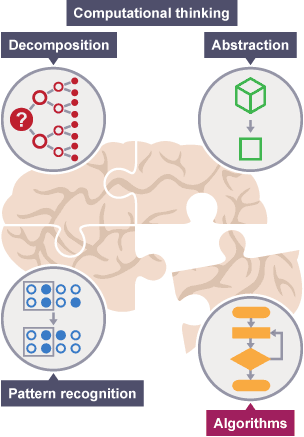
Algorithms are one of the four cornerstones of Computer Science. An algorithm is a plan — a set of step-by-step instructions to solve a problem. The source introduces the concept with everyday examples (tying shoes, making tea, getting dressed), explains why algorithms matter for programming, introduces "garbage in, garbage out," and walks through two ways to represent an algorithm: pseudocode and flow diagrams.
Key Points
Definition: A plan with a starting point, a finishing point, and a set of clear instructions in between. Must be unambiguous.
Garbage in, garbage out: Computers are only as good as the algorithms they are given. A poor algorithm produces a poor result regardless of the hardware.
Uses: Calculations, data processing, and automation.
Two representations:
-
Pseudocode — not a programming language. Written line by line. Keywords in uppercase (IF, THEN, ELSE, INPUT, OUTPUT), variables in lowercase, messages in sentence case.
-
Flow diagrams — use standard shapes. The source lists five shapes in a table (the table is a CDN image; shapes are: oval/terminal, rectangle/process, diamond/decision, parallelogram/input-output, and flow arrows). See algorithm for the full shapes reference.

Example program (name/age):
- Ask for name → greet the user
- Ask for age → if ≥ 70: "You are aged to perfection!", else: "You are a spring chicken!"
- Represented in both pseudocode and as a flowchart (CDN images; recreated as Mermaid in the concept page)
Concepts
- algorithm — the core concept this source defines and illustrates
- computational-thinking — algorithms are one of CT's four elements
- decomposition — planning a solution means breaking the problem into smaller parts first
- abstraction — filtering what matters before writing the algorithm